Category: Books

  • Trump wants his tariffs to reset the world. He might get his wish

    Business


    Business Economy

    Trump wants his tariffs to reset the world. He might get his wish

    Analysis by Luciana Lopez, CNN

     4 minute read

    Updated 1:43 PM EDT, Fri April 18, 2025
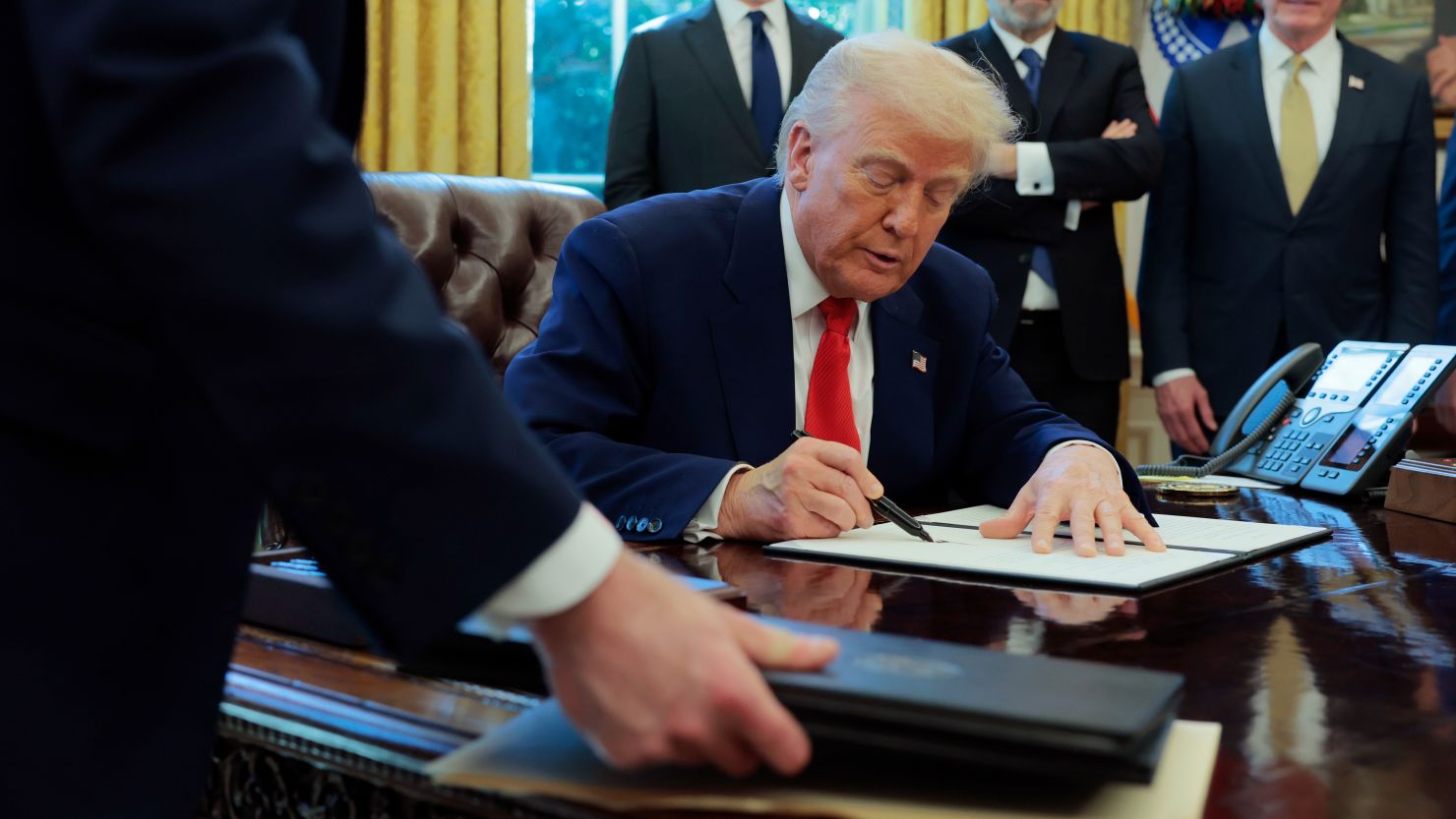
    President Donald Trump has repeatedly claimed that other countries have been “ripping off” the United States for years, despite American growth rates that have been the envy of the developed world.

    President Donald Trump has repeatedly claimed that other countries have been “ripping off” the United States for years, despite American growth rates that have been the envy of the developed world. Anna Moneymaker/Getty ImagesCNN — 

    President Donald Trump has repeatedly touted what he calls the return of manufacturing to the United States, hailing companies that have vowed to pour large amounts of money into making everything from computer chips to cars in America.

    But announcements are easy to make. In the long term, why would companies and other countries decide to invest in the US, which has upended the global economic order in just weeks? The United States moved from a stable economy, a trusted partner in trade agreements and global security, to a source of confusion and doubt in mere weeks after Trump assumed office on January 20.

    Perhaps no one has put it more bluntly than Ursula von der Leyen, the president of the European Commission, on Wednesday, when she said to a news outlet in Germany: “The West as we knew it no longer exists.”

    In other words: The United States isn’t the only trade game in town.

    Sure, the US is the world’s biggest economy, with a gross domestic product of almost $30 trillion. But China, the world’s No. 2 economy, is at about $18 trillion, according to the World Bank. And the total value of the European Union’s economy is around 17 trillion euros, or about $19 trillion.

    “We have 166 members in the organization. US trade is 13% of world trade. That means that there’s 87% of world trade happening between the other members of the WTO,” Ngozi Okonjo-Iweala, director-general of the World Trade Organization, told CNN’s Richard Quest on Wednesday.

    Trump has repeatedly claimed that other countries have been “ripping off” the United States for years, despite American growth rates that have been the envy of the developed world. So far, he has imposed 25% tariffs on aluminum and steel; 25% tariffs on goods from Mexico and Canada that aren’t compliant with a free-trade agreement; a massive 145% duty on Chinese imports; a 25% tariff on cars, with separate tariffs on auto parts coming at a later date; and a 10% baseline tariffs on all US imports.

    But those numbers don’t quite capture the whiplash-inducing speed with which Trump has levied tariffs, then walked them back, only to announce more tariffs, with another policy change soon after. The constantly changing playing field has made it even more difficult for businesses and nations to contend with the new policies.

    The tariffs in place now “will likely slow global economic growth significantly,” Moody’s Ratings said in a recent report. “And the inconsistent approach to policymaking has undermined confidence globally.”

    The changes have been not only swift but also deep.

    “These are very fundamental policy changes,” Federal Reserve Chair Jerome Powell said at an event hosted by the Economic Club of Chicago on Wednesday. “There isn’t a modern experience of how to think about this.”

    His comments sent US stock markets slumping, with investors clearly uneasy about what it means when a usually staid central banker suggests the world economic order is being turned topsy-turvy. (Trump ripped Powell on social media the next day, ostensibly for not lowering interest rates quickly enough, writing: “Powell’s termination cannot come fast enough!”)

    Workers at a garment workshop at Tangbudong Village at night in Guangzhou, Guangdong Province, China, on Monday, April 7, 2025. China pledged to retaliate against Donald Trump's latest tariff threat and stepped up efforts to support the market, raising the risk of a prolonged trade war between the world's two largest economies.

    Related articleCheap things from China are poised to get pricey. Secondhand retailers are ready to take advantage

    Already, as CNN’s Allison Morrow points out, companies and individuals are seeing real-world effects, from chipmaker Nvidia to aircraft maker (and top US exporter) Boeing, all the way to people shopping for cheap clothing or makeup hauls on Temu and Shein.

    China, for its part, has been diversifying its trading relationships beyond the US since its trade war with the US during Trump’s first administration. China’s exports to the US dropped from 19.2% of its total overseas shipments in 2018, to 14.7% in 2024, said Sheng Laiyun, deputy director of China’s National Bureau of Statistics, at a news conference Wednesday. Reuters reported last week that Beijing is trying to strengthen trading with the EU, despite the occasional past spat over cheap goods and trade flows.

    When asked by a reporter on Thursday if he was worried about China cozying up to US allies, Trump denied the possibility. “No, no,” he said. “Nobody can compete with us, nobody.”

    But China isn’t alone in distancing itself from the US. Many Canadians have already canceled trips to the US to boycott Trump’s tariff policy. Canadian Prime Minister Mark Carney last week posted on social media about speaking with von der Leyen.

    “Throughout our history, Canada and Europe have worked together to build up our economies and bolster our shared security,” he wrote. “In this time of global uncertainty, we’re focused on making our relationship even stronger.”

    Von der Leyen echoed those comments Wednesday, noting that more governments, including Canada, Mexico and India, have said they want to work more with the EU.

    “Everyone is asking for more trade with Europe — and it’s not just about economic ties,” she said. “It is also about establishing common rules and it is about predictability. Europe is known for its predictability and reliability, which is once again starting to be seen as something very valuable.”

    Christine Lagarde, head of the European Central Bank, pressed for European unity ahead of Trump’s April 2 announcement on so-called “reciprocal” tariffs.

    “I consider it a moment when we can decide together to take our destiny into our own hands, and I think it is a march to independence,” she told France Inter radio.

    Reuters and CNN’s Jake McGowan, Bryan Mena, Elisabeth Buchwald, Catherine Nicholls, Juliana Liu and John Liu contributed reporting.

    Up next

    Trump says he’s punishing foreign countries. He’s mostly punishing Americans4 minute read

    Trump’s trade war is pushing investors away from America5 minute read

    Boeing jet returns to US from China, a victim of Trump’s tariff war2 minute read

    ‘Chaotic’ tariff regime and trade war are leaving small businesses in their wake8 minute read

    Billionaire Ray Dalio is worried Trump’s tariff war could spark ‘something worse’ than a recession2 minute read

    Ad Feedback

    Most read

    Pope Francis, voice for the poor who transformed the Catholic Church, dies on Easter Monday

    Hegseth shared detailed military plans in second Signal chat that included his wife and brother

    Beijing warns countries against colluding with US to restrict trade with China

    Boeing jet returns to US from China, a victim of Trump’s tariff war

    Trump is defending Obamacare at the Supreme Court. A win could boost RFK Jr.’s influence

    Target rolled back DEI efforts. A boycott ensued – and traffic dropped

    What happens next after Francis’ death? How the Catholic Church will pick a successor

    Marijuana hospital visits linked to dementia diagnosis within 5 years, study finds

    El Salvador’s president offers Maduro US-deported Venezuelans for prisoner swap

    Trump administration demands Harvard give it reports of antisemitism and anti-Muslim bias amid fresh $1 billion threat

    Related

    Trump says he’s punishing foreign countries. He’s …

    Sign in


    Live TVListenWatch


    Business

    Follow CNN Business


    Most stock quote data provided by BATS. US market indices are shown in real time, except for the S&P 500 which is refreshed every two minutes. All times are ET. Factset: FactSet Research Systems Inc. All rights reserved. Chicago Mercantile: Certain market data is the property of Chicago Mercantile Exchange Inc. and its licensors. All rights reserved. Dow Jones: The Dow Jones branded indices are proprietary to and are calculated, distributed and marketed by DJI Opco, a subsidiary of S&P Dow Jones Indices LLC and have been licensed for use to S&P Opco, LLC and CNN. Standard & Poor’s and S&P are registered trademarks of Standard & Poor’s Financial Services LLC and Dow Jones is a registered trademark of Dow Jones Trademark Holdings LLC. All content of the Dow Jones branded indices Copyright S&P Dow Jones Indices LLC and/or its affiliates. Fair value provided by IndexArb.com. Market holidays and trading hours provided by Copp Clark Limited.Terms of UsePrivacy PolicyCookie SettingsAd ChoicesAccessibility & CCAboutNewslettersTranscripts

    © 2025 Cable News Network. A Warner Bros. Discovery Company. All Rights Reserved.
    CNN Sans ™ & © 2016 Cable News Network.

  • Elon Musk enables global smartphone calls via satellite — here’s how it works

    Elon Musk enables global smartphone calls via satellite — here’s how it works

    April 18, 2025 by Smith Noah

    Elon Musk enables global smartphone calls via satellitePin

    XFacebookPinterestWhatsAppShare

    1

    SHARE

    Elon Musk is at it again, pushing the boundaries of communication with his latest innovation—Starlink’s Direct-to-Cell service. After transforming global internet access, Starlink is now setting its sights on revolutionizing the way we use our smartphones, allowing users to make calls from virtually anywhere on Earth without any need for specialized hardware.

    Starlink’s Direct-to-Cell Service: What It Means ?

    Imagine this: you’re deep in a rainforest, sailing across the ocean, or trekking through the desert, far from any cell towers, but you’re still able to make a call. That’s the power of Starlink’s Direct-to-Cell service. Utilizing its vast satellite network, this service allows you to make voice calls directly from your regular smartphone, no hardware upgrades required. If your phone is LTE-compatible, you’re all set. It’s an ambitious leap forward in mobile communication, designed to simplify and expand access to the most remote areas.

    The idea behind this service is straightforward yet revolutionary. You won’t need any special satellite phone or modified device. Instead, as long as your smartphone supports LTE, you’ll be able to make calls from almost anywhere. This could change the way we think about connectivity, offering freedom and peace of mind for those in areas where traditional networks just don’t reach.

    Read The US Deals a Significant Blow to China in 2024: Americans Receive the Most Advanced Chip Technology, Targeting 2025

    Which Smartphones Are Compatible?

    One of the most exciting aspects of Starlink’s service is its compatibility. According to SpaceX’s letter to the FCC, devices from top brands like AppleSamsung, and Google have already been successfully tested with the service. Whether you’re using a brand-new iPhone 14 or a slightly older model like the iPhone 13, if your device supports LTE, it’s ready to connect.

    Starlink’s system doesn’t require any complex hardware upgrades, which is a significant benefit. Older devices, often left behind by newer technologies, can still take full advantage of this satellite connectivity. This commitment to supporting a wide range of devices ensures that cutting-edge communication is accessible to as many people as possible.

    Phones And Android Smartphones Can Now Use His Satellites

    Pin

    A Game-Changer for Messaging and Emergencies

    While the ability to make phone calls from remote areas is impressive on its own, Starlink’s Direct-to-Cell service also offers a major step forward in terms of messaging. Unlike traditional satellite communication systems that limit users to preset messaging templates, this new technology allows you to send fully customizable messages through your preferred platforms. This can be a literal lifesaver in emergencies, enabling users to communicate their needs clearly and in real-time.

    Read After Mark Zuckerberg, Billionaire Sam Altman Aims to Replace iPhones with a Device Created by a Former Apple Star

    Whether you’re checking in with loved ones during a hiking trip or making an urgent call from a stranded vehicle, the ability to send personalized messages or make voice calls can be a crucial feature. This flexibility promises seamless, reliable communication where it was previously impossible, ensuring that help can be called for in any situation.

    What’s Next for Starlink?

    As impressive as the Direct-to-Cell service is, this is only the beginning for Starlink. The satellite phone service is set to launch commercially, though details on pricing are still to come. This innovation holds great promise, not just for adventurers and emergency responders, but for everyday users in rural and underserved areas where mobile networks are often unreliable.

    SpaceX has already hinted at future expansions in its letter to the FCC, which include extending support for the Internet of Things (IoT), improving voice communication, and even enabling web browsing via satellite. These advancements would further elevate the service’s value for individuals, businesses, and critical services that rely on uninterrupted connectivity.

    Read He held a Nintendo 64 world record for 15 years — but no one believed him until this VHS

    Bridging the Global Communication Gap

    While fast fiber-optic internet and high-speed mobile networks are available in many urban areas, large swathes of the globe still suffer from poor or nonexistent coverage. Starlink’s Direct-to-Cell service has the potential to bridge this gap by offering a lifeline in regions where communication options are limited. For travelers, remote workers, and outdoor enthusiasts who rely on dependable access to stay safe and connected, this development could be a game-changer.

    By offering global connectivity from almost anywhere, Elon Musk’s Starlink is once again redefining what it means to stay connected. Whether for work, emergencies, or simply keeping in touch with family and friends, this satellite technology could reshape the future of mobile communication, making it possible to communicate no matter where you are on Earth.

    4.1/5 – (55 votes)

    Worse Than Resident Evil: Chinese Team Discovers Virus That Causes Victims to Grow WingsDiscover

    What Happens if You Connect a USB Stick to a Smartphone Charger ? I Tried It So You Don’t Have ToDiscover

    MSport|

    Sponsored by Taboola

    Register & Receive NGN500,000 ImmediatelyRead MoreSkip

    Elon Musk lent $6.7 million to a couple to buy one of their homes. Now, they’ve become his squattersDiscover

    Experts demand immediate ban on magic sponges over alarming health concernsDiscover

    Investing $200 with AI could earn you a second salary.Exinity Capital|

    SponsoredLearn More

    Register & Receive NGN500,000 ImmediatelyMSport Celebrates Partnership With Chelsea, Join Us, Keep Winning With MSportMSport|

    SponsoredSign Up

    ₦500,000 is Given When You Join MSport Today.Receive Your Cash Back Only Within 2 Mins Only In MSport.MSport Betting|

    SponsoredSign Up

    10,000 W Standalone Solar Kit in Nigeria: Affordable and Efficient – Learn More!Portable Power Station | Search Ads|

    SponsoredLearn MoreCategoriesTech

    China’s humanoid robot Tiangong is ready to take on the world

    Pros and Cons: Should You Embrace the Starter Pack Trend on Social Media?

    Leave a Comment

    CommentNameEmailWebsite

    Save my name, email, and website in this browser for the next time I comment.

    Welcome to Jason Deegan!

    A Massive Ocean Found 2

    Stay updated with the latest in technology. Whether you’re into gadgets, AI, cybersecurity, or the Internet of Things, we’ve got you covered. Our team delivers in-depth analysis, product reviews, and tech guides to help you stay informed and make smart choices in the fast-evolving world of tech.Know More…

    Recent Posts

    Menu

    Contact: contact@jasondeegan.com
    Call Us: (800) 555-0224
    6th Ave New York, New York State, United States

    Recent articles

    Jason Deegan

    © 2025 Jason Deegan All rights reserved.

    https://d759b44915f3aea5be2a178b6cc49bbe.safeframe.googlesyndication.com/safeframe/1-0-41/html/container.html

    X

  • DHL suspends Business-to-Customer shipments to U.S. amid new Customs rule

    close
    arrow

    Nairametrics

    Home  Economy

    DHL suspends Business-to-Customer shipments to U.S. amid new Customs rule 

    Samson Akintaro by Samson Akintaro

     April 20, 2025

    DHL suspends Business-to-Customer shipments to U.S. amid new Customs rule 

    Global logistics giant DHL has announced a temporary suspension of business-to-consumer (B2C) shipments to private individuals in the United States, following new U.S. Customs regulations that significantly lower the threshold for formal customs processing.

    The company announced this via a statement posted on its website over the weekend.

    According to the statement, effective April 5, 2025, all shipments entering the U.S. with a declared value above $800 now require formal customs clearance, a steep drop from the previous threshold of $2,500.

    RelatedStories

    No Content Available

    This change, enforced by U.S. Customs and Border Protection (CBP), has triggered a wave of additional paperwork and inspections at ports of entry.

    DHL says the regulation has caused a surge in formal entry processing, stretching its resources and causing multi-day delivery delays for high-value shipments.

    News continues after this ad

    “To manage this, starting Monday, April 21, 2025, and until further notice, we will temporarily suspend B2C shipments to private individuals in the U.S. where the declared value exceeds USD 800,” the company stated.

    Business-to-Business shipments not affected 

    The company, however, noted that business-to-business shipments would not be suspended but could face delays.

    Shipments under $800 to either businesses or consumers were not affected by the changes.

    News continues after this ad

    https://prime.nairametrics.com/mid-banner

    “Business-to-business (B2B) shipments to U.S. companies with a declarable value above USD 800 are not affected by the temporary suspension, though they may also face delays. 

    “This is a temporary measure, and we will share updates as the situation evolves,” DHL stated.

    Sub-Saharan Africa exmpted

    Meanwhile, DHL in a statement to Nairametrics, clarified that  B2C shipments sent by customers in Sub-Saharan Africa / Middle East and North Africa origin countries are exempted from this suspension and can continue to be shipped to the U.S as usual.

    DHL Express is continuing to accept all Business-to-Business (B2B) shipments to the United States, although there may be some transit time delays depending on the customs clearance requirements for each shipment,” it added.

    What you should know 

    DHL’s announcement comes as another fallout of the ongoing tariff between the U.S. and other large economies.

    Last Wednesday, Hong Kong Post said it had suspended mail services for goods sent by sea to the United States, accusing the U.S. of “bullying” after Washington cancelled tariff-free trade provisions for packages from China and Hong Kong.

    A trade war between the world’s two largest economies is intensifying, with President Donald Trump imposing additional tariffs totalling 145% on China and Hong Kong, while China has responded with additional import taxes of 125% on the U.S.

    • Hong Kong Post’s statement said it would also suspend air mail containing goods destined for the U.S. from April 27.
    • On May 2, the U.S. is also set to halt its “de minimis” provision for packages from China and Hong Kong under which those valued at under $800 and sent directly to consumers enter the country tariff-free.
    • From the beginning of May, those packages will be subject to a 90% tariff, or a flat fee of $75.

    Follow us for Breaking News and Market Intelligence.
       

    Tags: Business-to-Customer shipmentsDHL

    Samson Akintaro

    Samson Akintaro

    Samson Akintaro is a tech enthusiast and has over a decade experience covering and writing about the tech industry. He is currently the Tech Analyst at Nairametrics.

    Related Posts

    No Content Available

    Investing $200 with AI could earn you a second salary.Exinity Capital|

    SponsoredLearn More

    Spin it, Win it! Extra ₦500,000 is Given When You JoinReceive Your Cash Back Only Within 2 Mins Only In MSport.MSport Betting|

    SponsoredSign Up

    NGN500,000 Welcome Bonus Given To Everyone! Grab & Bet Today!High Chances to Win Extra NGN500,000 Cash Rewards Every Week.MSport|

    SponsoredRead More

    Get top forex trading strategies from an industry expert with this free ebookJoin over 10 million forex traders worldwide. Sharpen your forex trading skills with this free ebook!Deriv.com|

    SponsoredLearn More

    Nigeria needs 5,000 cold trucks, 100 cold rooms to curb N3.5 trillion post-harvest losses 

    Leave a Reply

    Your email address will not be published. Required fields are marked *

    Comment *

    Name *

    Email *

    Website

    Save my name, email, and website in this browser for the next time I comment.

    first bank
    Zenth Bank

    Synthesize Beautiful Scenes of Ha Giang Via Super Quality Travel Video – Flycam Nem TV

    DUNS

    Recent News

    Follow us on social media:

    Recent News

    EFCC, NOUN, Sunflower Hotel

    EFCC arraigns two Nigerians for allegedly diverting N340 million in investors’ funds 

     April 21, 2025

    Naira hits record low of N1960 /EUR1 at the black market 

    Naira trades at N1,845/€ on Easter Monday, Euro hits 3-Year high against Dollar

     April 21, 2025

    © 2025 Nairametrics

    Social Media Auto Publish Powered By : XYZScripts.com

    © 2025 Nairametrics

  • Hitler’s Terrible Tariffs

    Hitler’s Terrible Tariffs

    By seeking to “liberate” Germans from a globalized world order, the Nazi government sent the national economy careening backwards—and drove up the price of eggs 600 percent.By Timothy W. Ryback

    Hitler speaking at Berliner Sportpalast
    Speaking at the Berliner Sportpalast, on February 10, 1933, Hitler implied his tariffs would restore German honor and pride (Ullstein Bild / Getty)

    April 20, 2025, 8 AM ETShareSave

    From almost the moment Adolf Hitler took office as chancellor of Germany, tariffs were at the top of his government’s economic agenda. The agricultural sector’s demands for higher tariffs “must be met,” Hitler’s economic minister, Alfred Hugenberg, declared on Wednesday, February 1, 1933, just over 48 hours into Hitler’s chancellorship, “while at the same time preventing harm to industry.” Foreign Minister Konstantin von Neurath was concerned about lumber imports from Austria and a 200-million-Reichsmark trade deal with Russia. With several trade agreements about to expire, Hitler’s finance minister, Count Johann Ludwig Graf Schwerin von Krosigk, insisted that “immediate decisions” needed to be made. Hitler told his cabinet he had only one priority—to avoid “unacceptable unrest” in advance of the March 5 Reichstag elections, which he saw as key to his hold on power.

    https://8714176564224de101915088b92d9cb6.safeframe.googlesyndication.com/safeframe/1-0-41/html/container.html

    Hitler had what one might call a diffident, occasionally felonious disregard for financial matters. He owed 400,000 reichsmarks in back taxes. His understanding of economics was primitive. “You have inflation only if you want it,” Hitler once said. “Inflation is a lack of discipline. I will see to it that prices remain stable. I have my S.A. for that.” (The S.A., or Brownshirts, were the original paramilitary organization associated with the Nazi Party.) Hitler held Jews responsible for most of Germany’s financial woes.

    Hitler relied on Gottfried Feder, the National Socialist Party’s long-serving chief economist, to develop the specifics of an economic program. Feder had helped concoct the strange brew of socialism and fanatical nationalism in the original 25-point program of this putative “workers’ party.” In May 1932, Feder outlined what would become the first Nazi economic plan, in a 32-page position paper designed for ready implementation were Hitler to suddenly find himself in power. High on Feder’s agenda for a Hitler economy were tariffs.

    “National Socialism demands that the needs of German workers no longer be supplied by Soviet slaves, Chinese coolies, and Negroes,” Feder wrote. Germany needed German workers and farmers producing German goods for German consumers. Feder saw “import restrictions” as key to returning the German economy to the Germans. “National Socialism opposes the liberal world economy, as well as the Marxist world economy,” Feder wrote. Our fellow Germans must “be protected from foreign competition.”

    Recommended Reading

    Even though Hitler’s own foreign minister, Konstantin von Neurath, was concerned that the strategy would spark a trade war, and could drive up the price of imported eggs by 600 percent, Feder’s tariffs fit into Hitler’s larger vision for “liberating” the German people from the shackles of a globalized world order.

    The crash of 1929 had plunged Germany, along with much of the rest of the world, into an abyss. Markets collapsed. Factories were idled. Unemployment soared. In the early 1930s, one out of three German workers was unemployed. But Hitler had inherited a recovering economy: In December 1932, the German Institute for Economic Research reported that the crisis had been “significantly overcome”; by the time Hitler was appointed chancellor, in January 1933, the economy was on the mend.

    Thus Hitler’s main economic task as chancellor was not to mess things up. The German stock market had rallied on news of his coming to power. “The Boerse recovered today from its weakness when it learned of Adolf Hitler’s appointment, an outright boom extending over the greater part of stocks,” The New York Times reported.

    But rumors of potential tariffs and the abrogation of international agreements, along with Hitler’s challenges to the constitutional order, sent alarm bells clanging. The conservative Centre Party warned Hitler against “unconstitutional, economically harmful, socially reactionary and currency endangering experiments.” Eduard Hamm, a former economics minister who served on the board of the German Industry and Trade Association, dispatched a stern letter to the new chancellor instructing him on the “legal, economic and psychological prerequisites for building capital.” The free-market system, Hamm reminded Hitler, was based on trust, the rule of law, and adherence to contractual obligations.

    Hamm went on to explain that even though Germany imported more agricultural products than it exported to its European neighbors, these countries provided markets for German industrial production. (At the time, Germany imported on average 1.5 billion reichsmarks annually in agricultural products, while exporting an average 5.5 billion reichsmarks in industrial and manufactured goods.) “The maintenance of export relations to these countries is a mandatory requirement,” Hamm wrote. If one were to “strangle” trade through tariffs, it would endanger German industrial production—which, in turn, would inflict severe self-harm on the German economy, and lead to increased unemployment. “Exporting German goods provides three million workers with jobs,” Hamm wrote. The last thing Germany’s recovering but still-fragile economy needed was a trade war. Hamm urged Hitler to exercise “greatest caution” in his tariff policies.

    Feder
    Gottfried Feder, the economic architect of Hitler’s tariff regime, said that “the needs of German workers could no longer be supplied by Soviet slaves, Chinese coolies, and Negroes.” (Heinrich Hoffmann / Ullstein Bild / Getty)

    But Hitler made no effort to reassure the markets, insisting that the tariffs were necessary and that he needed time to fix the ruined country his predecessors had left him. “Within four years the German farmer must be saved from destitution,” Hitler said in his first national radio address as chancellor. “Within four years unemployment must be completely overcome.” Hitler provided scant details as to how this was to be accomplished. By this point, he had broken even with the tariff cheerleader Feder, and had abandoned most of the action items for developing a nationalist and socialist economy. These items had included increased taxation of the wealthy; state supervision of large corporations; and the prohibition of “new department stores, low-priced shops, and chain stores.”

    As chancellor, Hitler left his own plans for the German economy intentionally vague. His chief priority, as he told his ministers, was to secure an outright majority in the March 5 Reichstag elections. Hitler calculated that he needed between 18 million and 19 million votes. “There is no economic program that could meet with the approval of such a large mass of voters,” Hitler told party leaders.

    But although the average voter may not have cared about the details of the Hitler economy, the markets did. The initial surge in stocks that greeted Hitler’s appointment halted then dipped and flattened amid the political and economic uncertainty of Hitler’s chaotic first weeks as chancellor. The German Industry and Trade Association issued a public warning on tariffs. “Germany has the largest export surplus of all major trading countries,” the association reported. “This situation calls for double caution in trade policy measures that could lead to countermeasures.”

    Hans Joachim von Rohr, who worked at the Reich’s nutrition ministry, went on national radio to explain the logic of Hitler’s tariff strategy. “The products that Germany lacks must be made more expensive; then farmers will produce them in sufficient quantities,” Rohr explained. “And if foreign competition is kept at bay by tariffs and the like, city residents will prefer domestic production.” Rohr offered lard—“Schmalz”—as an example.

    If Germany raised the import duty on Schmalz, a staple of the German diet, the German farmer would be motivated by the price increase to raise “three-hundred-pound pigs,” the main source of lard, instead of the more common “two-hundred-pound pigs,” the major source of bacon. The problem, as one critic observed, was that bacon was more lucrative than lard, even as “lard pigs” consumed more feed than “bacon pigs.” Switching from bacon pigs to lard pigs, this critic calculated, would ultimately drive the pig farmer into bankruptcy. He noted further that the international trading system had been in place for 200 years and proved itself beneficial to all parties. Hitler’s proposed “national economy,” with its self-defeating tariff policies, would plunge the country into a “severe crisis” that could cost hundreds of thousands of jobs. And that was even before any damage wreaked by retaliatory tariffs.

    The Hitler tariffs, announced on Friday, February 10, 1933, stunned observers. “The dimension of the tariff increases have in fact exceeded all expectations,” the Vossische Zeitung wrote disapprovingly, proclaiming the moment a “fork in the road” for the German economy. It appeared that Europe’s largest and most industrialized nation would suddenly be returning “to the furrow and the plow.” The New York Times saw this for what it was: “a trade war” against its European neighbors.

    The primary targets of the Hitler tariffs—the Scandinavian countries and the Netherlands—were outraged by the sudden suspension of favored-nation trading status on virtually all agricultural products, as well as on textiles, with tariffs in some cases rising 500 percent. With its livestock essentially banished from the German market, Denmark, for example, was facing substantial losses. Farmers panicked. The Danes and Swedes threatened “retaliatory measures,” as did the Dutch, who warned the Germans that the countermeasures would be felt as “palpable blows” to German industrial exports. That proved to be true.

    “Our exports have shrunk significantly,” Foreign Minister Neurath informed Hitler in one cabinet meeting, “and our relations to our neighboring countries are threatening to deteriorate.” Neurath noted that informal contacts with Dutch interlocutors had been “bruskly broken off.” Trade relations with Sweden and Denmark were similarly strained, as were those with France and Yugoslavia. Finance Minister Krosigk anticipated that the agricultural sector would require an additional 100 million reichsmarks in deficit spending.

    Hitler launched his trade war on the second Friday of his chancellorship. That evening, he appeared in the Berlin Sportpalast, the city’s largest venue, for a rally in front of thousands of jubilant followers. It was his first public appearance as chancellor, and it served as a victory lap. Hitler dispensed with the dark suit he wore in cabinet meetings in favor of his brown storm-trooper uniform with a bright-red swastika armband.

    In his address, Hitler declared that the entire country needed to be rebuilt after years of mismanagement by previous governments. He spoke of the “sheer madness” of international obligations imposed by the Treaty of Versailles, of the need to restore “life, liberty, and happiness” to the German people, of the need for “cleansing” the bureaucracy, public life, culture, the population, “every aspect of our life.” His tariff regime, he implied, would help restore the pride and honor of German self-reliance.

    “Never believe in help from abroad, never on help from outside our own nation, our own people,” Hitler said. “The future of the German people is to be found in our own selves.”

    Hitler did not refer specifically to the trade war he had launched that afternoon, just as he did not mention the rearmament plans he had discussed with his cabinet the previous day. “Billions of reichsmarks are needed for rearmament,” Hitler had told his ministers in that meeting. “The future of Germany depends solely and exclusively on the rebuilding of the army.” Hitler’s trade war with his neighbors would prove to be but a prelude to his shooting war with the world.

    This is your last free article.

    About the Author

    Timothy W. Ryback

    Timothy W. Ryback is a historian and director of the Institute for Historical Justice and Reconciliation in The Hague. He is the author of several books on Hitler’s Germany, most recently Takeover: Hitler’s Final Rise to Power. (Author photo by Anne de Henning)

    Explore More Topics

    Adolf HitlerGermanytrade war

  • Wealth Beyond Worry Series – Chapter 3

    Wealth Beyond Worry Series – Chapter 3

    Chapter 3 – Ai Software Tools for Automated Passive income generation for you

      Below are a number of AI tools that can help you build wealth beyond worry as Stefan, Abigail and my humble self-have shared in prior section. Let’s get practical!

    Wealth Beyond Worry: Generating Passive Income in a Volatile Economy with AI Wealth Beyond Worry Series 1 of 7 By John Anderson Cooper

    3.1 Ai Books Publishing Wealth Beyond Worry Passive Income

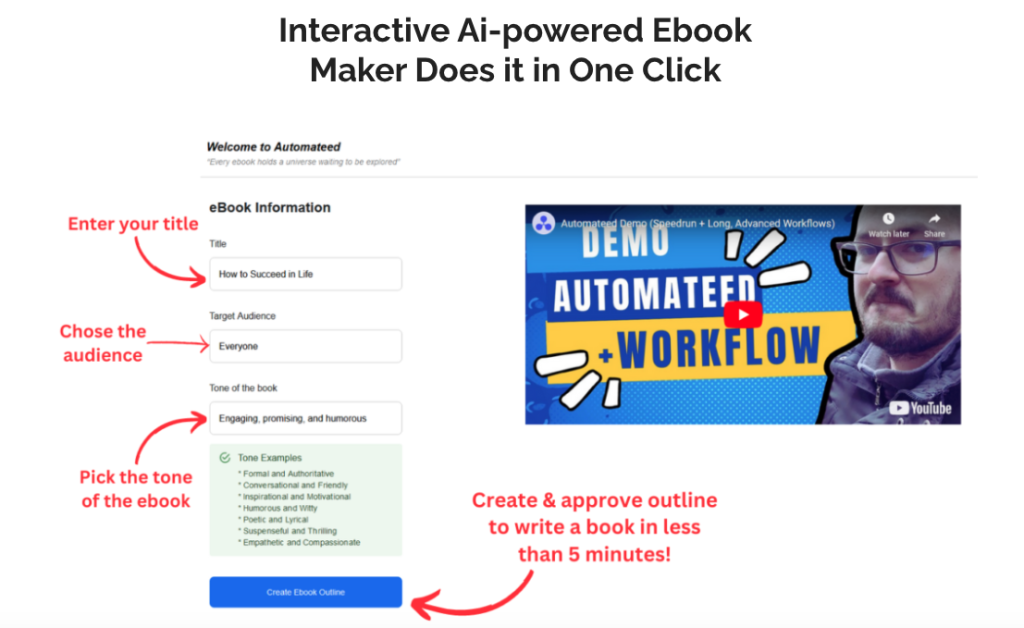
    Automateed: All-in-One ai eBook Generator

    • Create unique ebook using artificial intelligence
    • Create covers and chapter images
    • Perfect lead magnets & for KDP
    • In-depth and up to date information
    • Book is done in 5-10 minutes
    • Sell them as your own

    Enable effortless eBook creation with Automateed, your ideal AI eBook Generator. Effortlessly create an ebook and speed up your writing and design process using our advanced AI tools, tailored for both novice and experienced authors. Whether it’s crafting your first book or 100th, Automateed will effortlessly create a book to resonate with your audience.

    Keywords for "Wealth Beyond Worry" • Passive Income Strategies, • AI Financial Tools, • Wealth Building Techniques, • Financial Independence, • Automated Income Generation, • Economic Resilience, • Diversified Income Streams,

    Now Build Wealth through this offer:

    Now to the real deal in wealth beyond worries, if you are interested in the self-publishing niche, lets dive into Stefan’s platform that help authors and publishers scale up their efforts!

    Using Stefan’s process, signup to the book writing platform using this link https://automateed.com?ref=gm-12806

    You will be offered a 20% gift on signup using this code – 20offautomateed

    3.2 Ai financial tools in Trading onSMARD Club

    SMARD – AI Trading Platform With Scientifically-Backed Algorithms

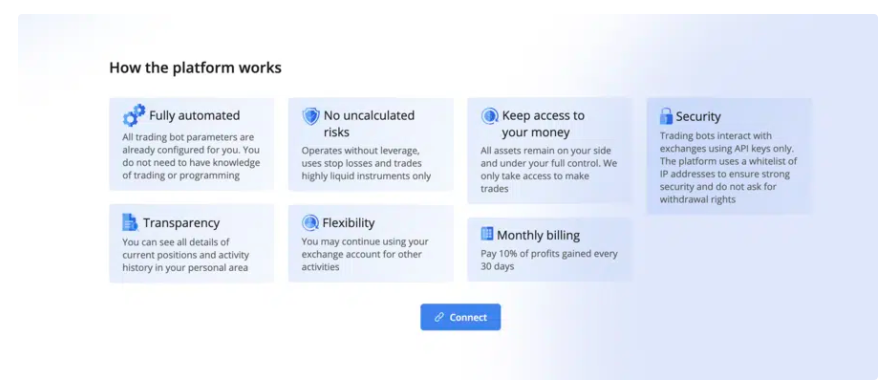
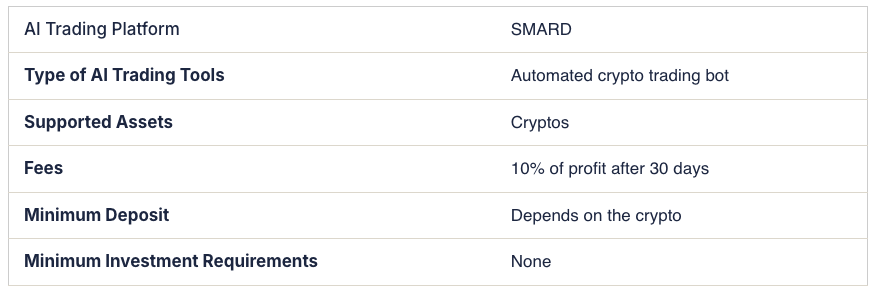
    SMARD is an advanced automated crypto trading bot designed to operate seamlessly on a trader’s smartphone, requiring no manual setup or configuration. 

    Keywords for "Wealth Beyond Worry" • Passive Income Strategies, • AI Financial Tools, • Wealth Building Techniques, • Financial Independence, • Automated Income Generation, • Economic Resilience, • Diversified Income Streams,

    This tool distinguishes itself by automatically executing trades on behalf of its users, leveraging a sophisticated algorithm based on momentum effect-based scientific research.

    SMARD’s algorithm systematically identifies future market winners, offering a hands-off trading experience that doesn’t require understanding current market trends.

    A key USP of SMARD is its efficiency and ability to trade 24/7 without needing trader intervention, thus removing emotional decision-making and improving trade execution speed by analyzing real-time market data.

    Moreover, SMARD operates without leveraging, trades only in highly liquid instruments, and uses risk control measures like stop losses and trailing stops, ensuring a low-risk trading environment. 

    The bot’s cost structure is attractive, with no upfront payments required. Fees are only 10% of the client’s profit after the first 30 days.

    • Passive Income Strategies, • AI Financial Tools, • Wealth Building Techniques, • Financial Independence, • Automated Income Generation, • Economic Resilience, • Diversified Income Streams,

    Additionally, traders can continue to use their accounts for personal trading, provided they do not interfere with the bot’s operations.

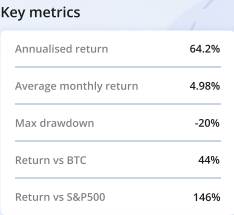
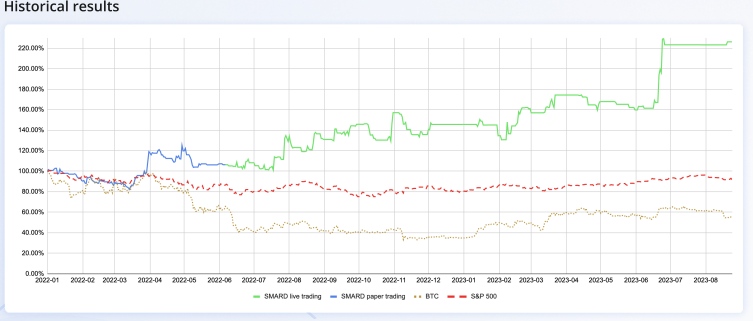
    SMARD’s algorithm, backed by scientific research on the momentum effect, ensures high returns over time with relatively low risk, making it a promising choice for automated crypto trading.

    • Passive Income Strategies, • AI Financial Tools, • Wealth Building Techniques, • Financial Independence, • Automated Income Generation, • Economic Resilience, • Diversified Income Streams,

    KEY HIGHLIGHTS

     Win-win pricing (the client pays only for results at the rate of 10% of profits)

    – No money transfer is required. All funds remain in the client’s exchange account and under his full control. Connection to SMARD is via api without access to withdrawal.

    – No prepayments and binding cards. The first payment only after 30 days in the amount of 10% of profit.

    Pros 

    • Uses scientifically-backed algorithms.
    • Operates 24/7 with low risk.
    • No upfront payment required.

    Cons 

    • Fees based on profits may be high for successful trades.
    • Passive Income Strategies, • AI Financial Tools, • Wealth Building Techniques, • Financial Independence, • Automated Income Generation, • Economic Resilience, • Diversified Income Streams,

    Now,SMARD: Trading Bot Affiliate Program

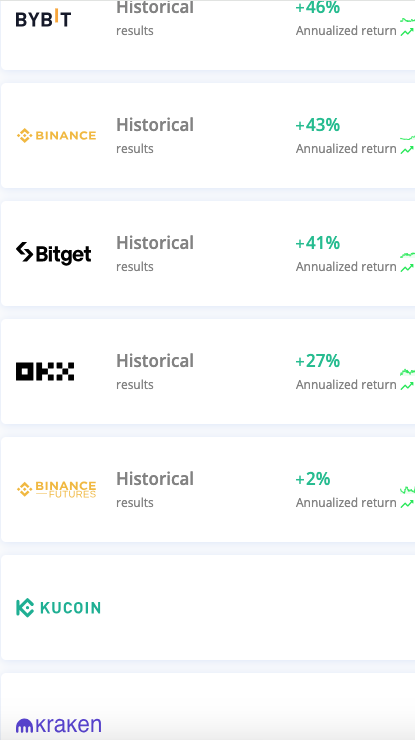
    SMARD allows clients to utilize fully automated trading strategies without having to dive into the details of market analysis and trading. The software supports trading on Binance Spot, Binance Futures, OKX and Bitget and growing. For an up-to-date list of exchanges, check out the website.

    • Passive Income Strategies, • AI Financial Tools, • Wealth Building Techniques, • Financial Independence, • Automated Income Generation, • Economic Resilience, • Diversified Income Streams,

    The main advantage of SMARD is that they only charge 10% of the profit clients make with them, not a classical service fee.

    Highly effective strategies, ease of use, and performance rewards increase customer lifetime value and increase affiliate deductions.

    • Passive Income Strategies, • AI Financial Tools, • Wealth Building Techniques, • Financial Independence, • Automated Income Generation, • Economic Resilience, • Diversified Income Streams,

    How does theSMARD Affiliate program work?

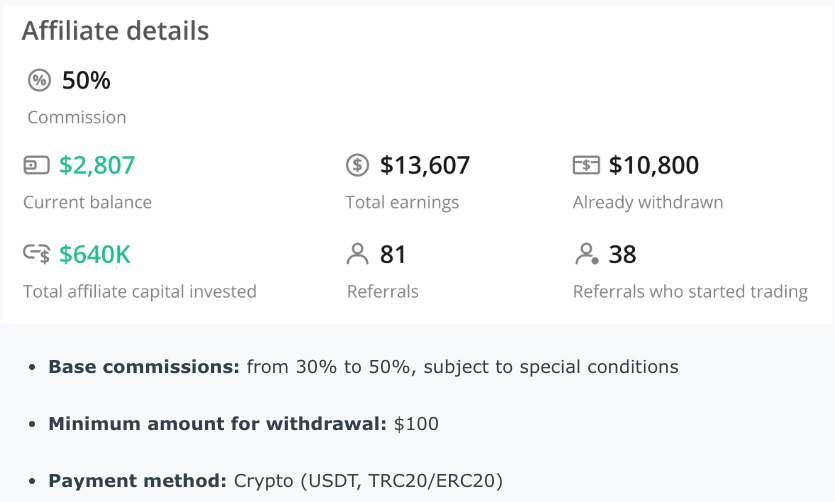
    SMARD allows affiliates to earn between 30% and 50% of the commissions of referred clients, depending on the terms of the partnership. SMARD’s trading algorithms are designed for long-term investment, which in turn equals lasting income for SMARD affiliates as well.

    In order to become an affiliate, you need to fill out an application on their website. As soon as the application is processed, you will be able to see your affiliate link in the personal area and start sharing it with your audience.

    You too can if you are determined. Let’s explore what are the options out there by starting with the traditional methods of passive income generation. Fasten your seatbelt, learn, then deploy.

    • Passive Income Strategies, • AI Financial Tools, • Wealth Building Techniques, • Financial Independence, • Automated Income Generation, • Economic Resilience, • Diversified Income Streams,

    SMARD Spot Time Series Momentum  – Strategy

    The strategy relies on a strong momentum effect in the volatile cryptocurrency world. It aims to generate absolute returns in the cryptocurrency market by trading spot instruments. The strategy is designed for investors seeking to maximize returns by taking advantage of algorithmic portfolio management methods.

    METHODOLOGY

    The strategy is designed in such a way that most of the time it carries zero risk to the market and stays in the base currency. In case of a major market move, the strategy buys the moving instrument or a few of them and stays in the position till the move is over.

    1. Liquidity The strategy exclusively trades the top 50 cryptocurrencies by market capitalization in order to ensure enough market liquidity to enter and exit a position. This approach was carefully tested across many exchanges and instruments and proved to be the most reliable as these instruments carry stability and predictability, attributes that may be lacking in smaller, more volatile cryptocurrencies, especially during major market moves.

    2. Strong Trends The strategy focuses on trading instruments that demonstrate strong trend signals and do not show excessive intraday volatility, which is attributed by frequent bi directional moves. By leveraging the knowledge of benchmark volatility, the strategy identifies price consolidation trends and manages the position size accordingly to minimize potential losses.

    3. Stop Losses Effective risk management is achieved through the use of stop losses, both fixed and trailing. Depending on prevailing market conditions, the strategy selects the most suitable combination of stop losses to safeguard trading positions.

    • Passive Income Strategies, • AI Financial Tools, • Wealth Building Techniques, • Financial Independence, • Automated Income Generation, • Economic Resilience, • Diversified Income Streams,

    Academic research on SMARD System.

    The strategy is based on empirical research and is consistent with the quantitative momentum investing philosophy described in the research paper , providing favorable risk adjusted returns in the cryptocurrency market. It aims to capitalize on the well documented momentum effect in financial markets, where assets that have performed well in the recent past tend to continue their upward trajectory, while underperforming assets persist in their underperformance.

    • Passive Income Strategies, • AI Financial Tools, • Wealth Building Techniques, • Financial Independence, • Automated Income Generation, • Economic Resilience, • Diversified Income Streams,

    The strategy is available for SMARD clients starting 10.06.2022

    Join SMARD Club via this link https://smard.club/?p=58af3402f1d44996

    You can type the url exactly as started above to take advantage of the welcome gift.

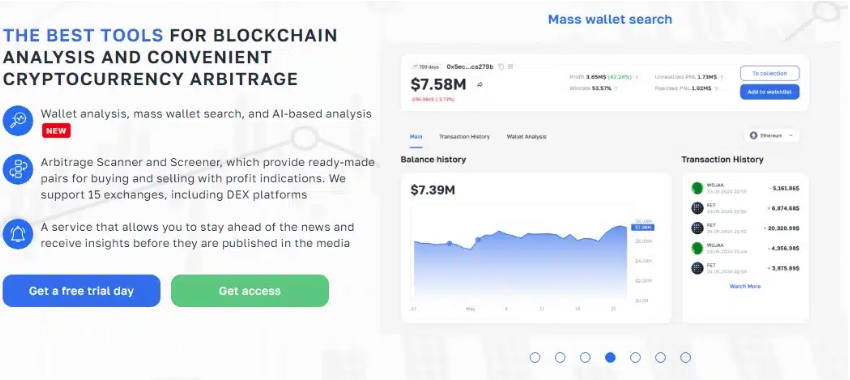
    3.3. Ai Financial trading tool –ArbitrageScanner – Best Trading Tool for Crypto Arbitrage & Blockchain Analysis

    ArbitrageScanner is a top AI trading software that enables investors to leverage the price differences between exchanges, allowing them to make huge profits from the disparities. Thanks to its innovative AI infrastructures, the trading software keeps tabs with more than 60 CEX and DEX, providing users with a timely update on when to buy and sell a cryptocurrency asset.

    The tool provides a guaranteed profit of 5-50% of users’ capital per month through its distinctive feature that allows users to leverage some of the most profitable strategies. Some of these strategies are Spot + Features, Features + Features, and Features + Spot.

    • Passive Income Strategies, • AI Financial Tools, • Wealth Building Techniques, • Financial Independence, • Automated Income Generation, • Economic Resilience, • Diversified Income Streams,

    Also, ArbitrageScanner as an all-around trading software has some real-time AI-powered tools that notify users about the biggest spreads in the market. Leveraging the support of more than 40 blockchains, it makes it possible for users to track the spread between popular networks like Ethereum, BNB Chain, Polygon, and many others.

    The platform also keeps tabs on blockchain data, compatible networks, and their coin withdrawal capabilities. Another key attraction for ArbitrageScanner is its intuitive and easy-to-use interface, positioning it as an ultimate tool for newbies and seasoned traders alike.

    ArbitrageScanner is more appealing and supports traders with little experience to make huge profits. Just with its search feature, users can discover strategies, investment portfolios, and in-depth analysis of coins. For example, you could replicate a client’s strategy and earn over $1,700 on the STRK token using the Spot + Features strategy. Arbitrage Perpetuals captured the 1.5% difference on the $STRK token between OKX spot and Bybit futures and the client was notified immediately. Earnings were $1500 in 40 minutes, funding rate over 0.2% in 8 hours. And the client continued to receive income from funding every 8 hours.

    It is also possible to copy the investment strategies of numerous wallets with noticeable gains and grow your portfolio.

    • Passive Income Strategies, • AI Financial Tools, • Wealth Building Techniques, • Financial Independence, • Automated Income Generation, • Economic Resilience, • Diversified Income Streams,

    Pros 

    • Manual bot reduces risk – no need to connect to exchange APIs
    • ROI, Winrate, PNL Filters
    • Arbitrage Perpetuals is available
    • Supports 5 blockchains for analysis
    • Supports a wide range of cryptocurrencies

    Cons 

    • No mobile app

    You can follow the link below to access the offering with payoffs

    https://arbitragescanner.io/?ref=MHYBUNOZE3

    Code MHYBUNOZE3

    Visit ArbitrageScanner

    3.4 Ai Investing tools onPionex

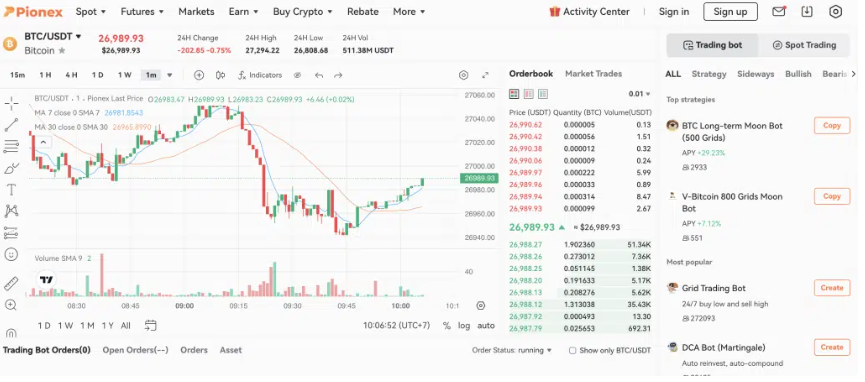
    Pionex – Popular AI Investing Platform with Pre-Built Crypto Bots – a leading Copy bot Platform in the world    

    If you’re searching for an AI crypto trading bot, check out Pionex. It offers a fully-fledged crypto trading platform that doubles up as an AI bot. This means that you can trade cryptocurrencies automatically without needing to connect Pionex to an exchange. Pionex supports almost 380 crypto markets, so you’ll have plenty of trading opportunities.

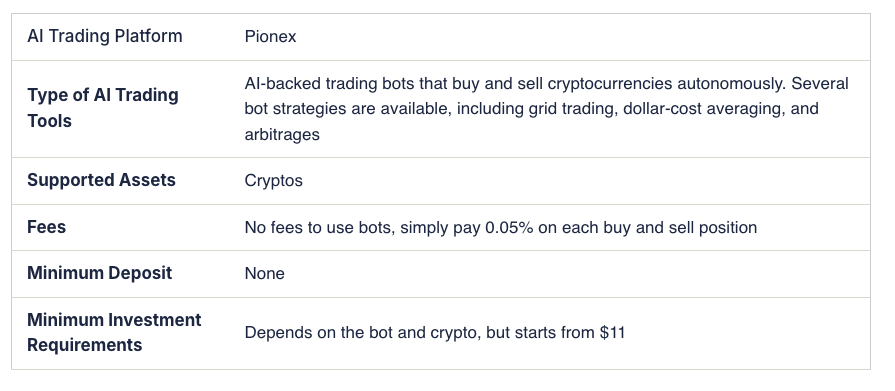
    This includes some of the best cryptocurrencies to trade, such as Bitcoin, Dogecoin, Solana, Shiba Inu, and Cardano. In terms of its AI bots, Pionex offers several strategies to choose from. This includes a grid trading bot that buys leading cryptocurrencies during market dips and cashes out at pre-defined profit levels. There’s also a dollar-cost averaging bot that’s aimed at long-term investors.

    • Passive Income Strategies, • AI Financial Tools, • Wealth Building Techniques, • Financial Independence, • Automated Income Generation, • Economic Resilience, • Diversified Income Streams,

    Other strategies include portfolio rebalancing, dual investments, and arbitrage trading. Pionex has a solid reputation and its AI bots have been tested by various YouTube influences. This includes Max Maher (968,000 subscribers), who tested Pionex bots with $10,000 of his own capital. In terms of fees, Pionex doesn’t charge to use its trading bots. Instead, you’ll simply pay a trading fee every time the bot enters and exits a position. This stands at just 0.05% per slide.

    • Passive Income Strategies, • AI Financial Tools, • Wealth Building Techniques, • Financial Independence, • Automated Income Generation, • Economic Resilience, • Diversified Income Streams,

    Pros 

    • One of the best AI trading platforms for cryptocurrencies
    • Several bot strategies to choose from
    • Only pay when the bot trades – 0.05% per slide
    • Almost 380 cryptocurrencies supported
    • No minimum deposit requirement

    Cons 

    • Does not support traditional assets like stocks
    • High margin trading fees

    Visit Pionex

    You can sign up using any of the links below and take advantage of the offering

    Normal Link:  https://www.pionex.com/en/signUp?r=0UQbytq55iH

     Quick Link : https://accounts.pionex.com/en/signUp?r=0UQbytq55iH

    Code: 0UQbytq55iH

    3.5 Ai financial tools in Trading onByBit trading Bot

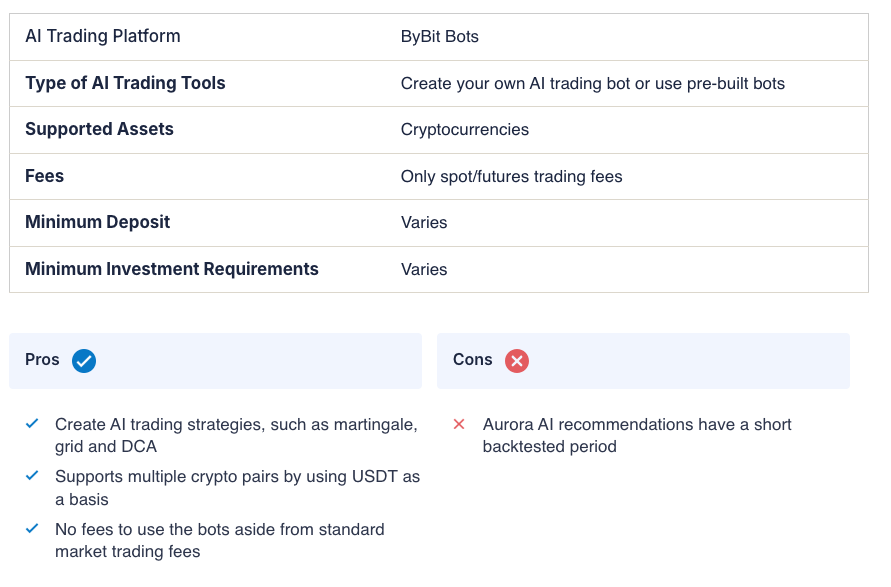
    ByBit Trading Bots – Create Your Bots or Use AI-Recommended Bots 

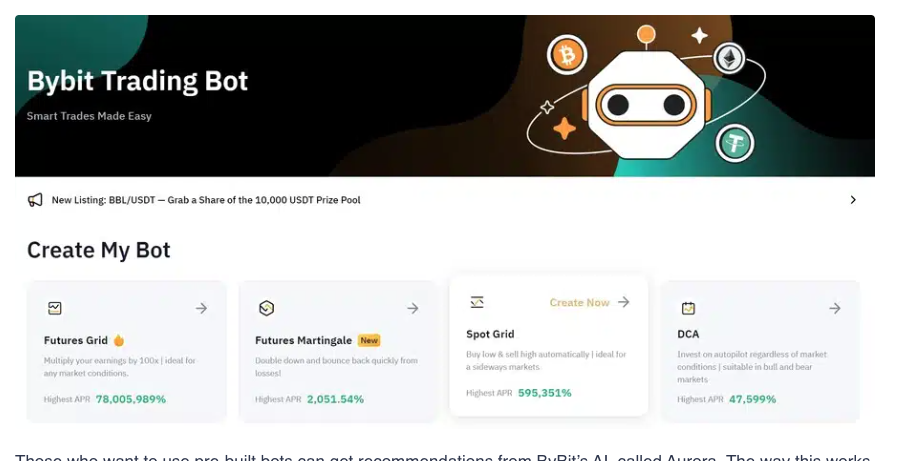
    ByBit crypto exchange, which is one of the largest derivatives trading platforms, lets you automate your trading strategies by building your own custom bots or by using bots that are backtested and recommended by AI.

    If you decide to build your own bot, your options include grid bot – for futures and spot – dollar-cost averaging (DCA) bot and a martingale bot. Some of these bots have remarkable returns, such as the 78,000,000% APR for the futures grid bot.

    • Passive Income Strategies, • AI Financial Tools, • Wealth Building Techniques, • Financial Independence, • Automated Income Generation, • Economic Resilience, • Diversified Income Streams,

    Those who want to use pre-built bots can get recommendations from ByBit’s AI, called Aurora. The way this works is Aurora backtests seven days of historical market data and identifies the best strategy that focuses on yield. ByBit boasts over 70% win rate for its futures grid bot.

    • Passive Income Strategies, • AI Financial Tools, • Wealth Building Techniques, • Financial Independence, • Automated Income Generation, • Economic Resilience, • Diversified Income Streams,

    Earning Potential:


    Bybit: Best Crypto Exchange Affiliate Program with AI – Life Time Earning

    Bybitis a cryptocurrency exchange that allows you to trade different types of crypto markets. Moreover, Bybit also allows you to leverage your investments, increasing your profits but amplifying your risks; it is not suitable for beginners. The crypto trading platform was founded in 2018. The crypto trading platform was founded in March 2018, and till now, it has over three million+ registered users.

    How does Bybit Affiliate Program work?

    You can sign up for Bybit’s affiliate program if you want to connect with a rapidly-growing cryptocurrency trading platform to maximize influence and profits. Lifetime commissions are provided to their partners if they join the affiliate program. In addition, users who sign up through their partner’s link and actively trade on Bybit will get calculated in real-time. 

    Benefits

    • The commission rate is more than two times higher than industry standards.
    • You will receive a monthly recurring revenue share for every client you refer to Bybit.
    • There’s a 30% commission in Bybit’s profits from your client’s trades. Additionally, you will also get 10% of what your sub-affiliates earn.
    • Users will be able to partner with the most reliable crypto exchange in the world.
    • It has transparent campaign tracking and reporting.
    • Compensation in the cryptocurrency of your choice.

    JOIN THE AFFILIATE PROGRAM OF BYBIT

    Below is the referral link to take advantage of the offering

    https://www.bybit.com/invite?ref=MZ9EDK9

    Referral Code – MZ9EDK9

    Get the full book of Wealth Beyond Worry Series

  • Wealth Beyond Worry – Chapter 2

    Wealth Beyond Worry – Chapter 2

    Chapter 2. The Role of AI in Generating Passive Income

    2.1 How AI Simplifies Income Generation

    AI technology has revolutionized the way we think about income generation. Gone are the days when traditional methods dictated our financial paths. With AI, I have discovered that the process of making money is not only simplified but also more efficient. By automating routine tasks, AI frees up our valuable time and resources, allowing us to focus on more strategic aspects of income generation. For example, I can now manage my investments without spending hours analyzing data. Instead, AI tools sift through massive datasets in seconds, providing insights that I could have only dreamed of uncovering by hand. It’s like having a powerful assistant working tirelessly for me, analyzing trends and patterns while I strategize how to leverage them.

    Powerful algorithms play a crucial role in this transformation. Advanced machine learning models analyze market data at an unparalleled speed, identifying opportunities that may not be immediately obvious. I trust these algorithms to help me make informed decisions in real-time, whether I’m trading stocks or investing in real estate. They take into account countless variables—historical data, market trends, and even social sentiments—to guide my choices. This is a game changer; rather than guesswork, I rely on data-driven insights that boost my confidence in every transaction I make. I remember when I first used an AI tool for market analysis; I felt empowered. It showed me the potential of informed investing and underscored how technology enhances our financial acumen.

    Remember, embracing AI does not mean relinquishing control; it enhances your decision-making capabilities. It provides you with the tools to explore new income opportunities efficiently. So, whether you’re venturing into online business, investing, or seeking creative income streams, think of AI as your partner in success. To harness its full potential, start small—experiment with different AI tools tailored to your needs. When you see the results, you’ll realize how this technology can change your financial trajectory.

    2.2 Innovative AI Tools for Financial Success

    There is a growing number of AI-driven tools that can significantly enhance your financial journey. These tools are designed to analyze data, automate processes, and provide real-time insights to help you make informed decisions. From budgeting apps that track your spending habits to sophisticated platforms that analyze market trends for investment opportunities, the options are abundant. I will be highlighting some AI tools that you can deploy right away and start earning with potential for larger spread in earning in chapter 3.

    Getting started with these AI tools is simpler than you might think. First, take the time to identify your financial goals—whether it’s saving for a vacation, paying off debt, or investing for retirement. Once you know what you want to achieve, research tools that align with those goals. Sign up for free trials or basic accounts to explore different platforms and see which ones resonate with your needs. Many of these tools come with comprehensive tutorials that guide you through how to use them effectively. Remember, the journey to financial success is not a sprint; take your time to familiarize yourself with these resources so you can fully leverage their capabilities. Incorporating AI into your income strategy can transform how you manage and grow your finances.

    One practical tip as you dive into the world of AI financial tools is to maintain an open mind and a willingness to adapt. Technology is constantly evolving, and the tools available today may be even more advanced tomorrow. Stay updated on new features and enhancements to ensure you are getting the most from your chosen tools. Additionally, don’t hesitate to reach out to online communities or forums for advice and shared experiences. Others may provide valuable insights on how they successfully utilized AI to enhance their income streams. Embrace the challenges and celebrate your achievements along the way, because every step forward is a step toward financial empowerment.

    2.3 Case Studies: Successful AI-Driven Income Models

    There are countless inspiring stories of individuals who have embraced artificial intelligence and turned it into a source of substantial income. One standout example is Sarah, a graphic designer who felt overwhelmed by the competition in her field. She decided to incorporate AI tools that streamline her design process, allowing her to create multiple versions of a logo or a marketing material in mere minutes. This not only increased her productivity but also allowed her to serve more clients simultaneously. As she became known for her unique ability to harness AI in her designs, her client base expanded significantly, leading to a remarkable increase in her income.

    Another example is James, an entrepreneur who recognized the potential of AI in the e-commerce landscape. He developed an online retail store that utilized machine learning algorithms to analyze customer behavior and optimize product recommendations in real-time. His store could predict trends and adjust inventory automatically. This method dramatically increased his sales, as customers were exposed to products tailored specifically to their tastes and preferences. By constantly refining his approach using AI analytics, James not only increased his profit margins but also built a loyal customer base that appreciated the personalized shopping experience.

    To achieve similar success, one essential method is to identify areas in your current work or business where AI can add value. Start small; explore AI tools that align with what you already do and experiment with integrating them into your routine. This could mean automating certain tasks that take up too much time or utilizing AI for insights into your customers or processes. As you gain confidence and see results, you can gradually expand your use of AI and possibly uncover new income opportunities. Remember, the key is not just to adopt technology but to leverage it creatively and strategically to pave your own path to financial success.

    2.3.1. Abigail McPherson (Not the real name) story from $100,000 to $10,000 valuation

    Abigail McPherson had always been fascinated by the potential of artificial intelligence. As a young software engineer, she had spent countless hours studying the latest advancements in the field and dreaming up new ways to apply them to real-world problems. So when she stumbled upon an obscure online course teaching AI-powered trading strategies, she knew she had to give it a try.

    The course was dense and complex, but Abigail was determined to master it. She spent hours each day studying, practicing, and experimenting with different techniques until she finally had a breakthrough. She had discovered a way to use AI to identify profitable trading opportunities and automate her investments.

    Excited by her discovery, Abigail decided to put her newfound knowledge to the test. She began by investing a small sum of money in the stock market, using her AI-powered trading strategy to guide her decisions. To her amazement, the results were almost immediate. Her investments began to grow at an incredible rate, and she soon found herself generating a steady stream of passive income.

    Encouraged by her success, Abigail decided to take her AI-powered trading strategy to the next level. She began to invest more money and expand her portfolio, using her AI to identify new opportunities and optimize her investments. As the months passed, her income grew exponentially, eventually reaching a staggering $100,000 per year.

    But Abigail wasn’t content to simply sit back and enjoy her newfound wealth. She wanted to use her AI-powered trading strategy to help others achieve financial freedom as well. So she began to share her knowledge and techniques with others, teaching them how to use AI to generate passive income and build wealth.

    Today, Abigail’s AI-powered trading strategy is used by thousands of people around the world. Her online course has become one of the most popular and respected in the field, and she has built a thriving community of like-minded individuals who share her passion for AI and finance. And even though she never could have imagined the incredible success she has achieved; Abigail knows that her journey is only just beginning.Today, her company is valued at $10m.

    You too can do the same! Watch out in Chapter 3

    2.3.2 Stefan’s Story with Book summaries and Book creation using AI for Authors with valuation in excess of 1 million

    Stefan’s Journey to $1 Million Passive Income with AI

    Stefan had always been fascinated by the potential of artificial intelligence to revolutionize the way we live and work. As a serial entrepreneur with a background in computer science, he had a vision of creating an AI tool that could write books. He saw an opportunity to automate the process of content creation, making it faster and more efficient for authors and publishers.

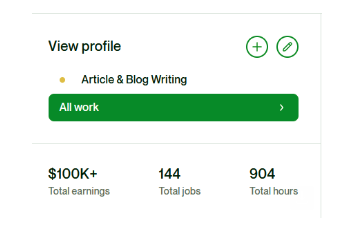
    Earlier in his early 20s as a student, Stefan had generated over $140,000 in income within a year from his work on Upwork, a freelancing platform where he was writing articles and books for clients. But he knew that he could do even better. He wanted to create a passive income stream that would allow him to live the life he wanted, without having to constantly work for clients.

    Here his story at Upwork with Ghost-writing

    • Passive Income Strategies, • AI Financial Tools, • Wealth Building Techniques, • Financial Independence, • Automated Income Generation, • Economic Resilience, • Diversified Income Streams,

    “And that’s only after about 1 year of working on the platform!

    Yeah, it seems not that bad at all. Especially for a previously brokie student, right? 

    But do you know what was behind it all? 

    Let me tell you:

    1. 1+ month of writing per book
    2. hours of fact checking
    3. Multiple outline variation for a client to approve
    4. struggling to meet all the deadlines
    5. bloodshot eyes from sleeping 3 hours a day

    So in short, there was much more hiding behind this “dream” that I seemed to have going on for myself.  

    But here’s the kicker: 

    Wondering, if I can automate this process and had this tool then,, I’d probably be chilling on a YACHT now. No kidding! 

    This tool is a game-changer. 

    Almost like a superpower 

    But Stefan’s ambition didn’t stop there. He also saw the potential for his AI tool to generate passive income using the same model with books and articles. He started creating courses around selling online, using his AI tool to write books and courses that could be sold on platforms like Udemy and Amazon Kindle Direct Publishing.

    The first step in Stefan’s process was to develop his AI tool. He spent months researching and experimenting with different algorithms and techniques, until he had created a tool that could write high-quality content at an unprecedented speed.

    Next, Stefan turned his attention to creating courses that could be sold online. He started by identifying profitable niches and creating outlines for courses that could be written by his AI tool. He then used his tool to write the content for each course, carefully editing and refining the output to ensure that it was of the highest quality.

    Once he had a collection of courses, Stefan started marketing them online. He created a website and social media presence for his brand, and used paid advertising to reach potential customers. He also reached out to influencers in his niche and offered them free courses in exchange for reviews and endorsements.

    As the months went by, Stefan’s passive income grew steadily. He was earning thousands of dollars each month from his courses and books, all of which were written and sold using his AI tool. He was able to scale his business quickly and efficiently, thanks to the power of automation and the high-quality content generated by his tool.

    But Stefan’s success didn’t stop there. He continued to innovate and improve his AI tool, adding new features and capabilities that made it even more powerful and versatile. He also expanded his business into new niches and markets, leveraging the scalability of his AI tool to generate even more passive income.

    Today, Stefan’s passive income from his AI tool and online courses is over $1 million per year. He is living proof that with the right tools and a bit of creativity, it is possible to generate a seven-figure income through automated online businesses.

    You too can do it! Watch out in Chapter 3


    2.3.3 John Anderson: My Story – From a modest $250,000 to $100 Million Valuation in 3 Years

    I have always been fascinated by the potential of artificial intelligence (AI) to revolutionize the way we live and work. As a successful entrepreneur and investor, I had made a fortune by identifying and capitalizing on emerging technologies. But I had never been more excited about a technology than I was about AI.

    My obsession with AI began when I first learned about the concept of “generative adversarial networks” (GANs), a type of AI algorithm that could generate new and original content, such as images, videos, and even text. I saw the potential for GANs to disrupt entire industries and create new ones, and I was determined to be at the forefront of this revolution.

    My first step was to assemble a team of top AI researchers and engineers to help me explore the possibilities of GANs. I scoured the globe for the best talent, and eventually assembled a team of 10 experts who were passionate about AI and eager to push the boundaries of what was possible.

    Together, we began experimenting with GANs, using them to generate everything from artwork to music to written content. We quickly discovered that GANs were not just a novelty, but a powerful tool that could be used to create high-quality content at scale.

    Next, we turned our attention to the world of finance, where we saw an opportunity to use GANs to generate passive income. We began experimenting with a new type of AI-powered investment strategy, using GANs to analyze market trends and identify profitable investment opportunities.

    To our surprise, the results were astounding.  We were able to generate a staggering $250,000 in passive income within just a few months, using nothing more than a handful of GANs and a few well-placed investments.

    But we didn’t stop there. We knew that the real power of GANs lay in their ability to create new and original content, and we were determined to push the boundaries of what was possible.

    Over the next few years, we continued to experiment with GANs, using them to create everything from AI-generated artwork to AI-powered music. We even used GANs to create a new type of AI-powered entertainment platform, where users could interact with AI-generated characters and environments.

    Today, my company is one of the leading providers of AI-powered content and entertainment, with a valuation of over $100 million. And I attribute it all to our willingness to take risks and push the boundaries of what is possible with AI.

    I never would have imagined that AI could be used to generate passive income, looking back on our journey. But by taking a chance and exploring the possibilities of GANs, I was able to create a new and exciting future for myself and my team.

    All these were achieved with once setup, sit back, relax and the numbers start rolling in! You too can do it! Watch out in Chapter 3

    Get the book – Wealth Beyond Worry Series

  • Wealth Beyond Worry Series – Chapter 1

    Wealth Beyond Worry Series – Chapter 1

    Chapter 1. Understanding Passive Income

    1.1 Defining Passive Income: My Journey to Discovering Wealth

    My path to understanding passive income began with a desire for financial freedom. Years ago, I was caught in the cycle of working hard just to pay the bills. I realized there had to be more to life than trading hours for dollars. This realization led me to explore how I could make money without working around the clock. I started reading about various investment strategies, side hustles, and the concept of earning without constant effort. I discovered that true wealth is not just about what you earn, but how you earn it. Passive income became my beacon of hope, guiding me towards a life where I could enjoy my time, pursue my passions, and build a legacy for my family. It wasn’t an easy journey, but every step taught me valuable lessons about financial independence.

    Wealth Beyond Worry: Generating Passive Income in a Volatile Economy with AI Wealth Beyond Worry Series 1 of 7 By John Anderson Cooper

    Wealth Beyond Worry Series 1

    Passive income can be defined as money you earn without having to actively work for it. This can come from investments, rental properties, royalties from creative works, or any other source where your money works for you instead of you working for money. In contrast, active income is the money you earn by doing a job or providing a service. The difference lies in the effort required: active income demands continuous work, while passive income, once established, can earn you money with minimal maintenance. Understanding this difference was a game-changer for me. I realized that if I could create streams of passive income, I could eventually free myself from the constraints of a traditional job and live life on my own terms.

    The journey to creating passive income streams requires both patience and persistence. It’s essential to start by identifying your strengths and exploring opportunities that resonate with you. Whether it’s investing in stocks, creating an online course, or writing a book, choose a path that excites you. Then, dedicate time to educate yourself, take calculated risks, and slowly build up your income sources. Remember, the beauty of passive income lies in its ability to grow over time. Every dollar you invest or effort you put into your venture has the potential to generate future returns. Starting small is perfectly fine as long as you remain focused on your long-term goals. Surround yourself with supportive communities who share your vision, and stay motivated by revisiting your reasons for seeking financial freedom. The journey can transform your life in ways you never imagined.

    1.2 The Importance of Passive Income in Today’s Economy

    The current economic landscape has become increasingly unpredictable. With job markets fluctuating and the rising cost of living, relying solely on one source of income can feel like walking a tightrope without a safety net. I’ve learned that diversifying your income streams is no longer just a good idea; it’s essential. We are witnessing a significant shift where the traditional nine-to-five employment model is not the only pathway to financial security. In fact, many individuals are gravitating towards side hustles, investment opportunities, and entrepreneurial ventures to establish a more stable financial footing. This shift means that if you are not exploring various income avenues, you might be left behind in a rapidly changing economy. Embracing multiple income streams not only provides a buffer during economic downturns but also opens doors to new opportunities and financial growth.

    Understanding the benefits of passive income can play a transformative role in achieving financial stability and independence. Passive income offers the freedom to earn money while you focus on other pursuits. This could mean nurturing your passions, spending time with loved ones, or simply enjoying your life without the constant pressure of meeting financial obligations. The beauty of passive income is that it allows money to work for you; a rental property or a well-placed investment can generate cash flow without direct, continuous involvement on your part. It serves as a cushion against unexpected expenses and acts as a foundation for long-term wealth. For me, the journey towards passive income has been both empowering and liberating, providing not only financial benefits but also a deeper sense of control over my life.

    Taking the first steps toward generating passive income doesn’t have to be overwhelming. Start with small investments that align with your interests and skills. Whether it’s creating an online course, investing in dividend stocks, or writing a blog that generates ad revenue, your journey can begin today. Each small effort leads to building a diverse income portfolio that grows over time. Imagine a scenario where you can enjoy vacations, hobbies, or simply peace of mind, knowing that your finances are secure and continuously developing. By exploring passive income opportunities, you are not just securing your present but also paving the way for a confident and abundant future.

    1.3 Common Myths About Passive Income Explained

    Many people hold misconceptions about passive income that can deter them from exploring these potentially lucrative avenues. One prevalent myth is that passive income is only for the wealthy or those with special connections. This belief can be incredibly discouraging for anyone staring down the possibilities of creating streams of income. The truth is, anyone, regardless of their financial background, can harness the power of passive income with dedication and effort. It’s about leveraging your skills and assets to create systems that generate revenue over time. Some might think that passive income is just a fancy term for “get-rich-quick schemes,” but in reality, it often requires upfront investment in either time or money to establish. The false notion that you can sit back and watch money roll in without any work can set you up for disappointment.

    Understanding the real potential of generating passive income lies in seeing it as a journey rather than an instant solution. While some methods might seem effortless, most require planning, persistence, and sometimes a bit of trial and error. Creating an online course, writing an eBook, or developing a rental property involves labor upfront but can lead to long-term rewards. Research and success stories illustrate how everyday individuals have transformed their financial situations by embracing passive income strategies. These cases often highlight the mix of creativity and tenacity involved—showing that success is accessible to those willing to put in the effort. Moreover, various resources—books, online courses, and communities—are available to support you in this process, making entry into passive income opportunities more achievable than ever.

    It’s essential to acknowledge that passive income does not mean that the work is behind you. Instead, it’s about building a foundation that allows for flexibility and can pay off in the long run. Think of it as planting a tree; initially, you nurture it through watering and care, but with time, it stands strong, providing shade and fruit without much additional work. One practical tip for anyone looking to dive into passive income is to start small. Consider your current skills and resources, and choose one area where you can create something valuable. Whether it’s a small investment in a stock or the creation of a simple blog, just taking the first step can open a world of opportunities. Remember, every successful journey starts with a single step, and passive income can be an incredible part of your adventure.

    Get the Book – Wealth Beyond Worry Series

en_USEnglish